
Smithsonian National Museum of the American Indian (NMAI)
To develop my understanding of collaborative conservation and museum practice, I completed my third-year placement at NMAI.
The National Museum of the American Indian (NMAI) is a Smithsonian institution. NMAI’s mission statement is: “In partnership with Native peoples and their allies, the National Museum of the American Indian fosters a richer shared human experience through a more informed understanding of Native peoples.” The collections encompass the cultural heritage of Native peoples from the Western Hemisphere, which include communities from the North and South American continents. The museum has a strong dedication to being good stewards of their collections through collections care, facilitating access, and enabling objects to return home to their communities.
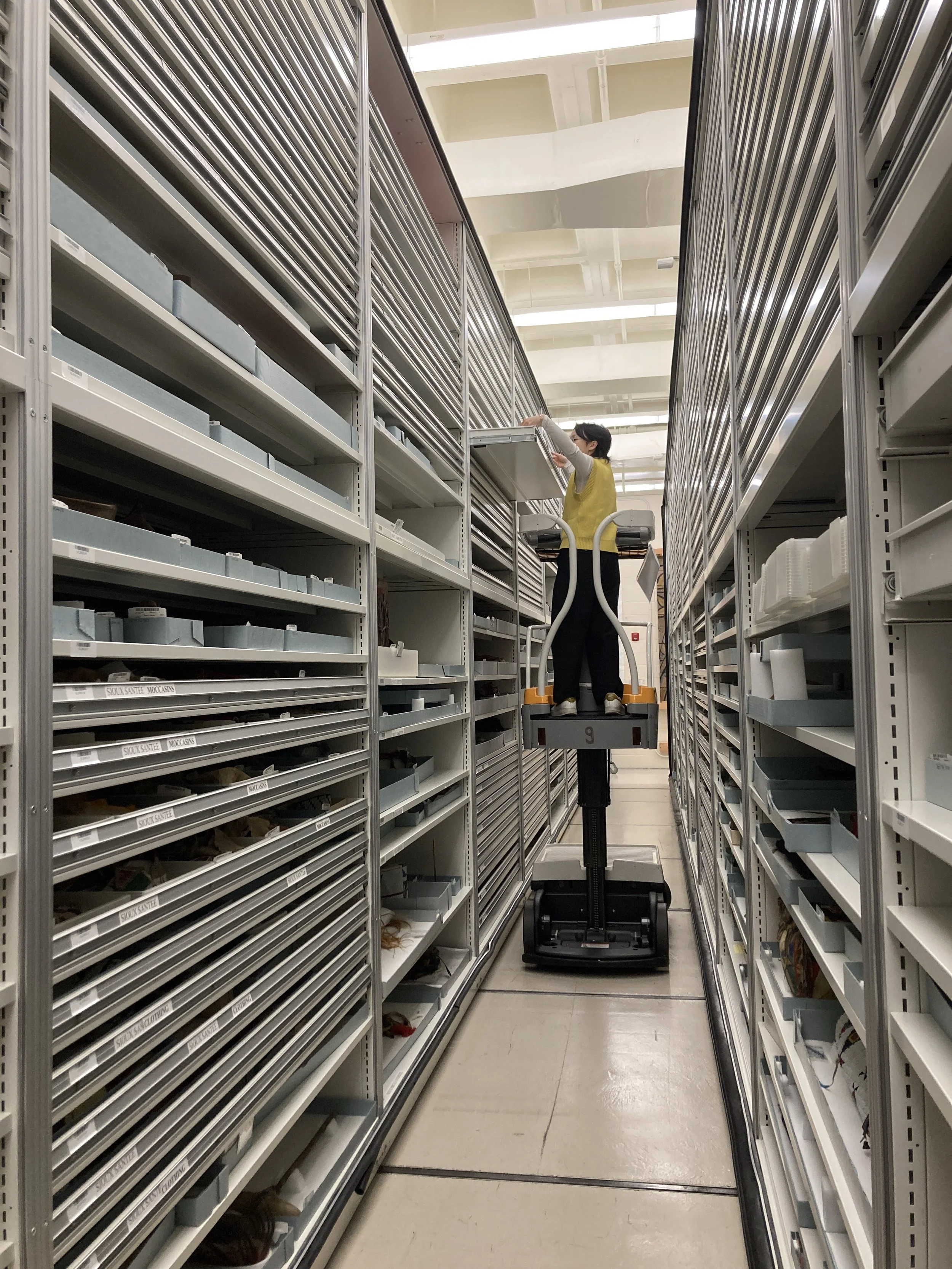
NMAI consists of the George Gustav Heye Center in New York City, main museum in Washington DC, and the Cultural Resources Center (CRC) in Suitland, Maryland. The conservation labs and collections are housed at the CRC. Throughout the year I will be working with the conservation staff, fellows, and contractors. There are objects and textiles conservation labs, with an adjoining office space.
In this internship, I was supervised by Kelly McHugh. Please click on this link for the: NMAI Organizational Chart.
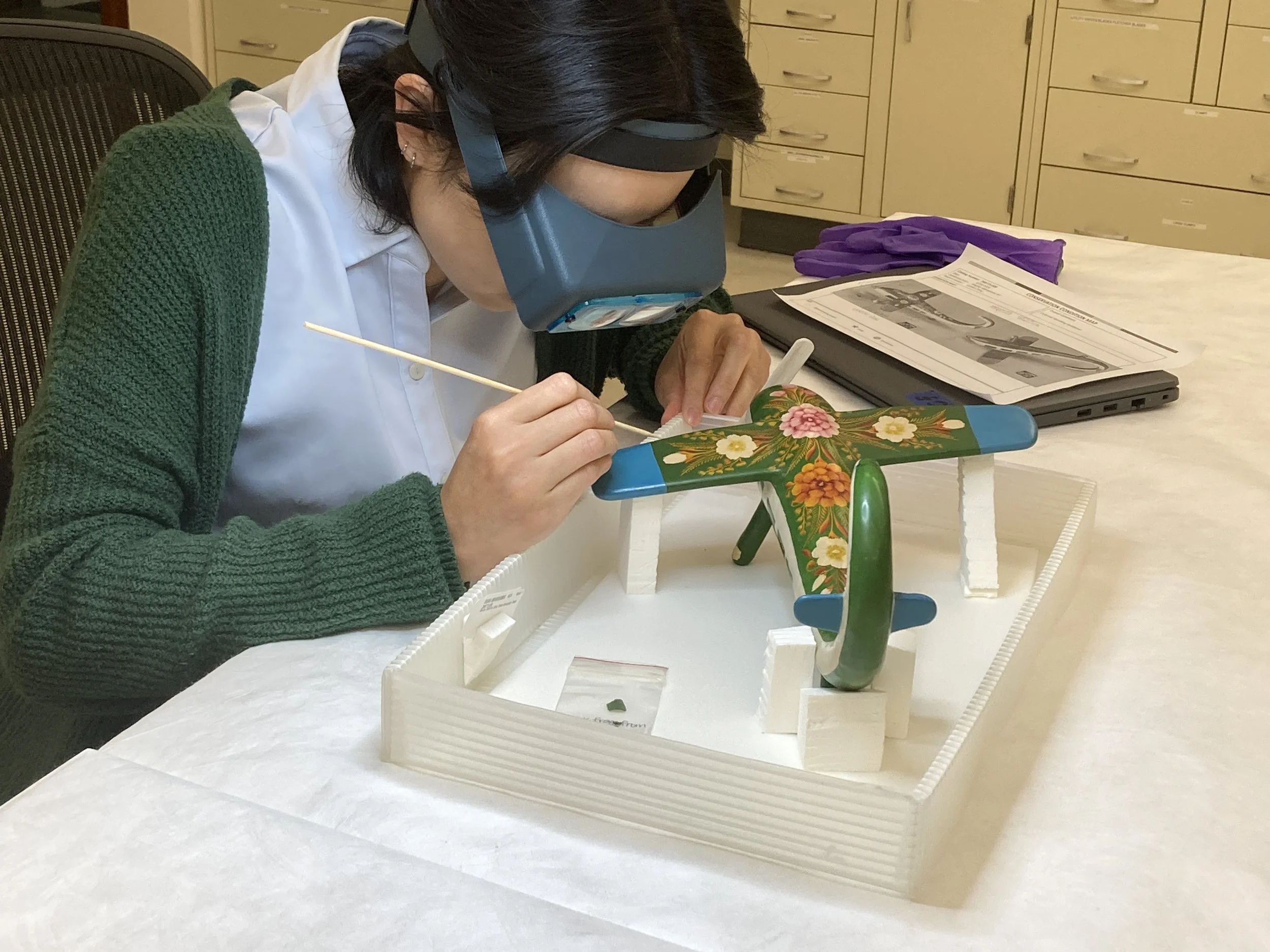
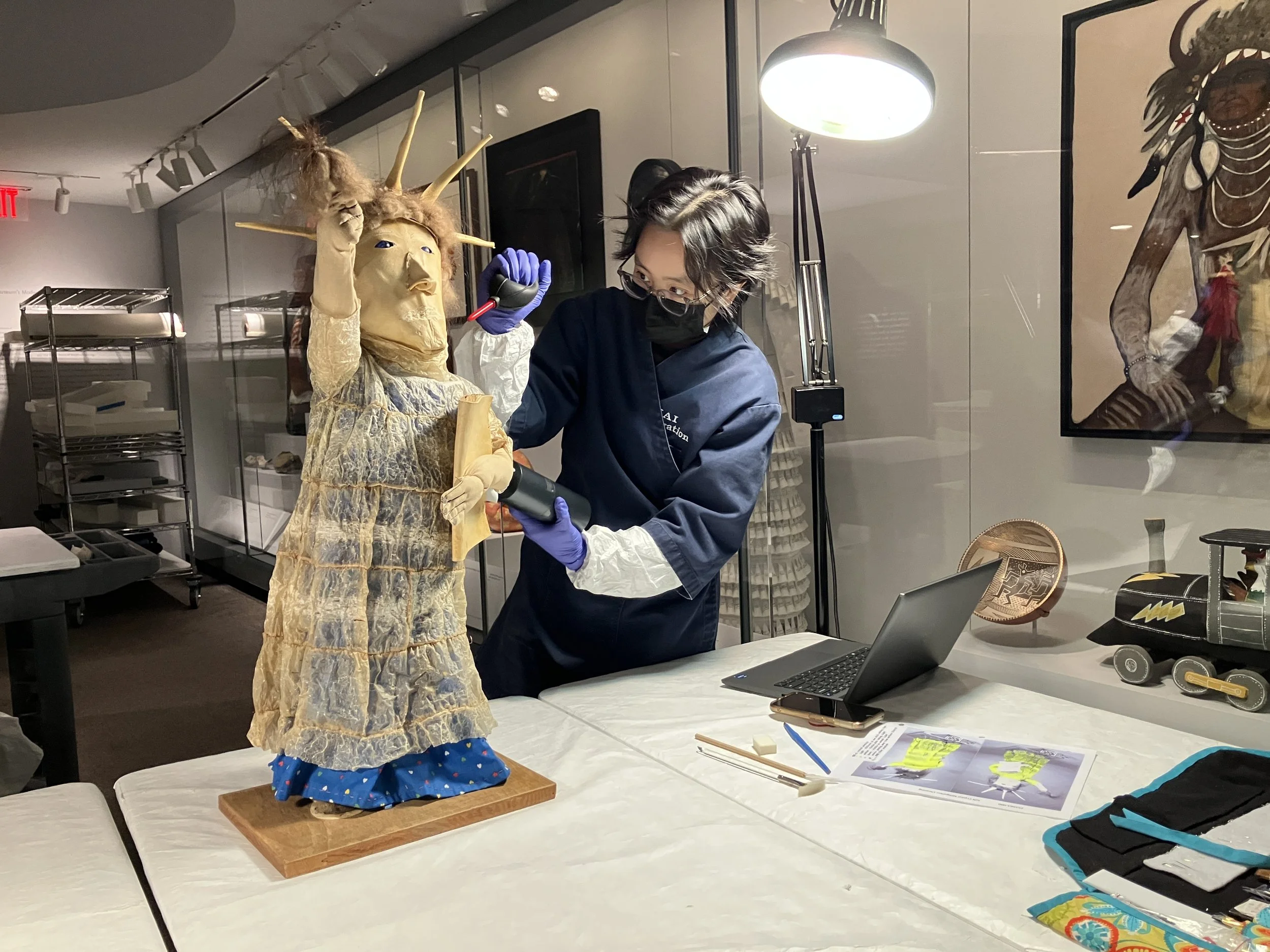
Inspecting a Nahua airplane model made from a painted gourd.
Mighty Miniatures Exhibition
Mighty Miniatures is an exhibition celebrating Indigenous miniatures and the artists who create them. The miniatures represent traditions of making, creativity, and material expertise. While many miniatures represent the importance of play for the transmission of cultural knowledge, many were also created for sale to outside audiences. The items in the exhibition span the Americas and represent a wide range of materials from ivory, textiles, to wood. Treatment largely focused on surface cleaning to remove superficial soiling, stabilization and aesthetic improvement according to the artist’s intent, if necessary.
For Mighty Miniatures, I was a co-liaison for conservation alongside Beth Holford to represent conservation in exhibition planning meetings. I also recorded an audio tour stop for a dog sled (178228.000) I worked and video clips for an upcoming social media feature.
The three treatment reports below are a selection from the eighteen objects that I treated for this exhibition.
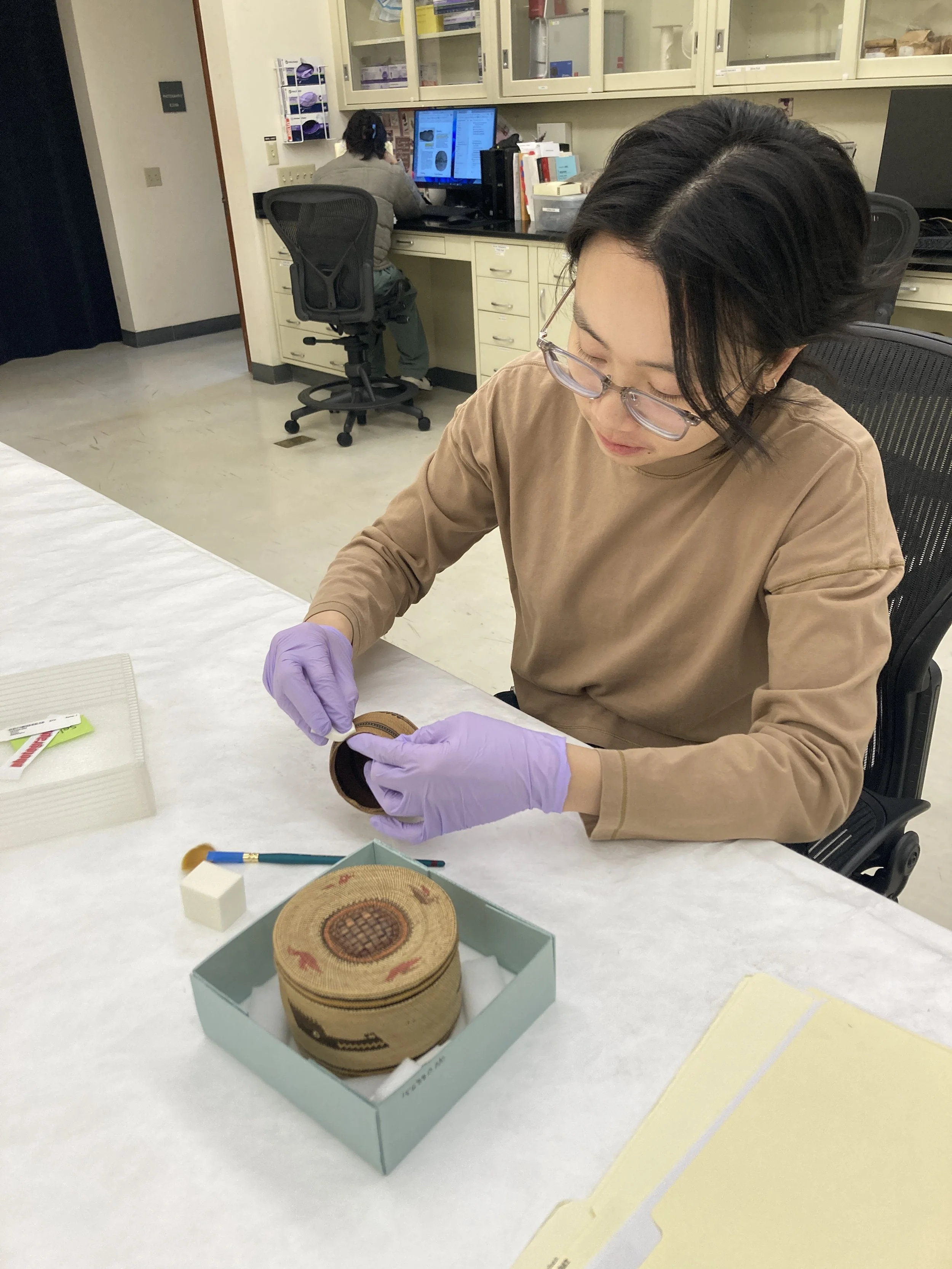
Cleaning Makah baskets with a cosmetic sponge.
Makah Community Loan
I participated in the conservation of belongings selected for loan to the Makah Cultural and Research Center (MCRC). As part of this long-term loan, this item may be used for exhibit and/or programming; the use and care for this item will lie with the MCRC staff. The full Makah collection was condition assessed during a collection condition survey (2018-2023) and treatment decisions were agreed upon through several in-person and virtual collaborative discussions with MCRC staff and Makah community representatives.
In general, treatment will focus on surface cleaning, stabilization and aesthetic improvement as agreed upon through discussions with the Makah in order to support exhibition and access while at MCRC.
I also conducted X-ray Fluorescence spectroscopy to identify pesticide residues. This was especially important to inform safe handling of these belongings in the Makah community.
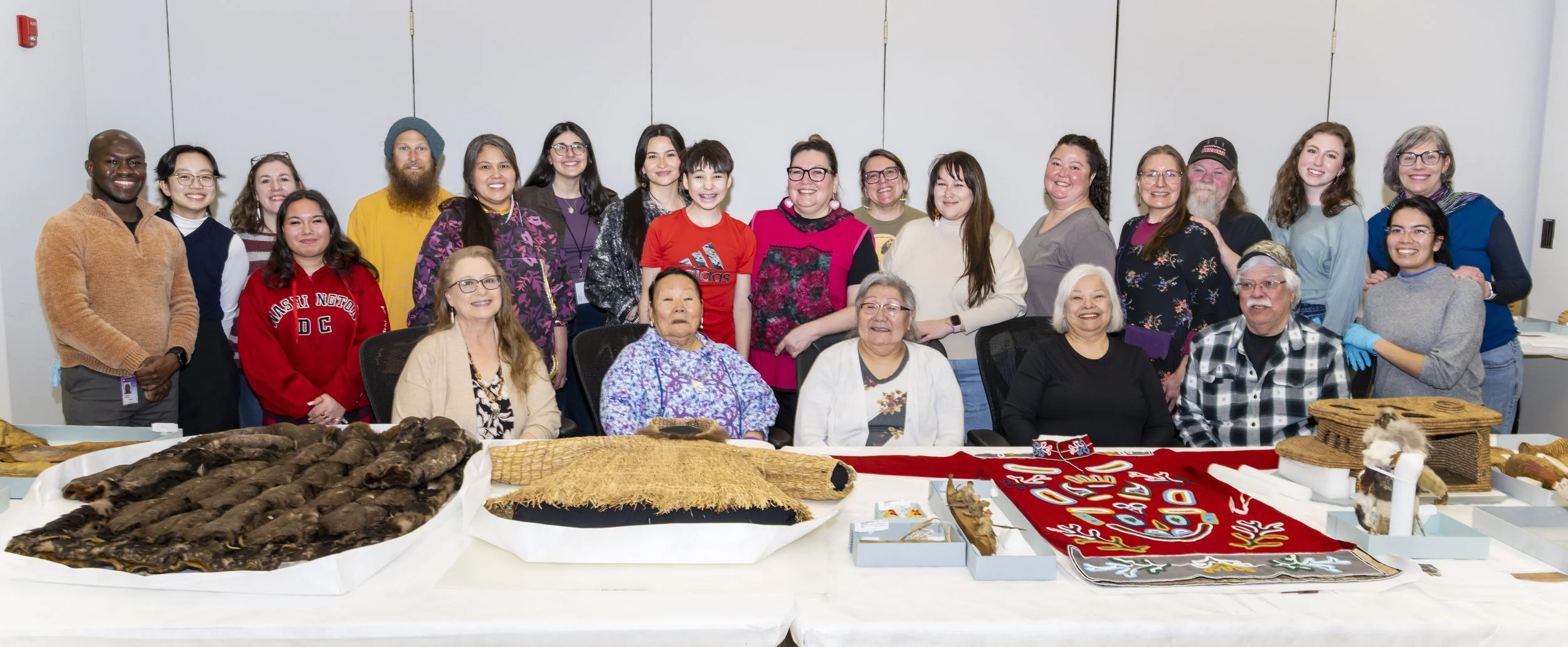
Woven Together group visit at the CRC.
Community Visits
A significant part of the NMAI Conservation department’s work is to facilitate community access and stewardship of the collection. This is in line with NMAI’s mission to center Indigenous authority, and highlighted the power of connecting communities and their belongings in museum.
During visits, I assisted with preparing items for viewing, collections handling, note taking, and the logistics of hosting.
Neyooxo Weavers. Tongva and Payómkawichum basketweavers.
Woven Together. Yup’ik, Dena’ina, and Sugpiaq artists.
Trama Textiles. Maya weavers, virtual engagement.
Cultural Heritage Forward. Peruvian and Chilean cultural heritage professionals.
Dr. Danny Luecke. Choctaw, flute researcher.
Prairie Band Potawatomi Tribal Historic Preservation Officer (THPO) and Chairman. For Mighty Miniatures.
Jodie Archambault. Hunkpapa / Oglala Lakota artist. For Mighty Miniatures.
Additional activities at NMAI:
Infinity of Nations crystal mitigation
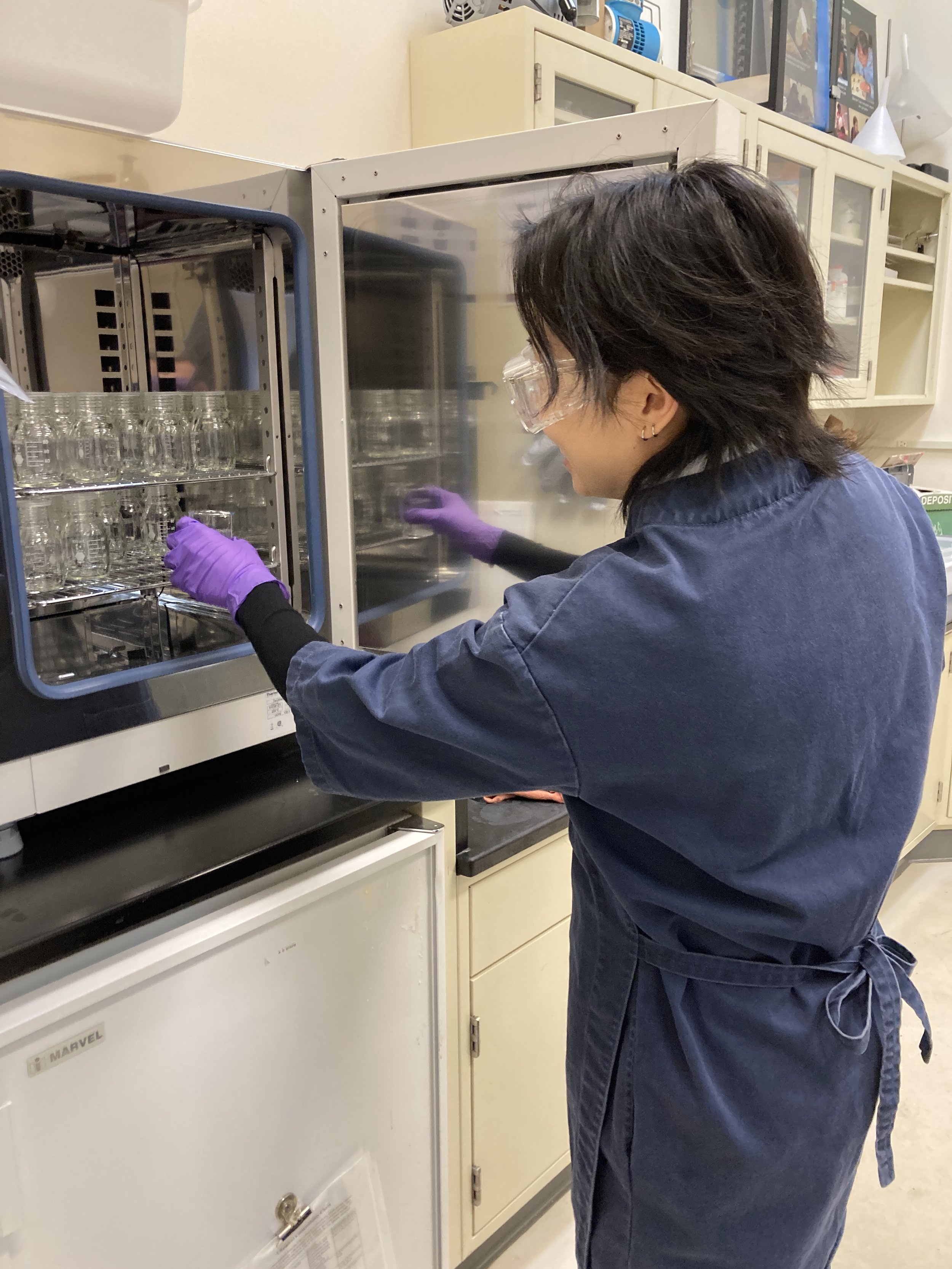
I surface cleaned eighteen items from the Infinity of Nations exhibition at NMAI-NY. Exhibit cases in this exhibition were built with an adhesive (Terostat) that released a piperidinol compound (2,2,6,6- tetramethyl-4-piperidinol or TMP-ol) causing crystal growth on diverse types of objects. There has been an ongoing analysis, survey, and cleaning campaign for several years.
Oddy testing of graphic inks for Smithsonian Exhibits.
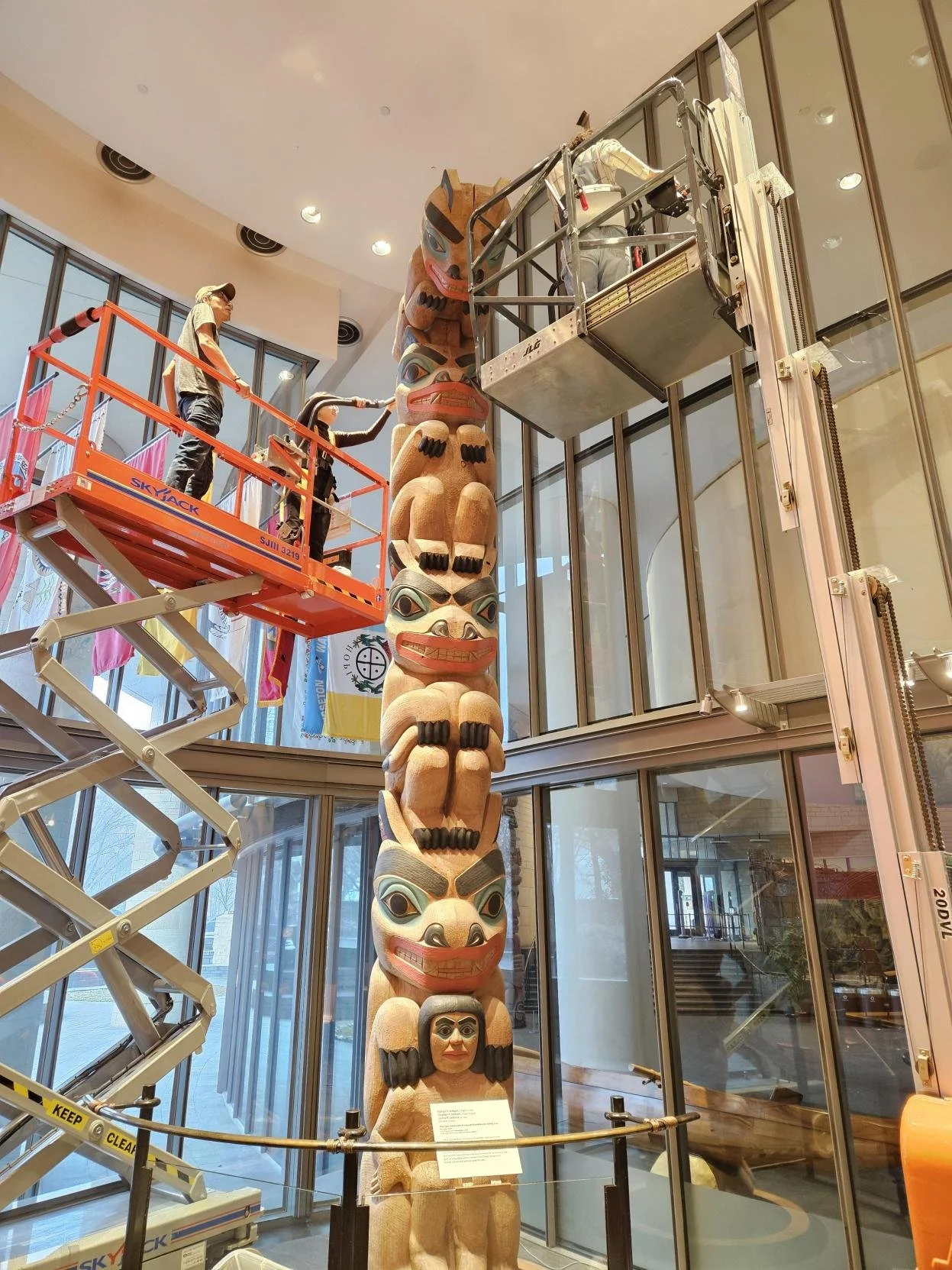
Monthly cleaning of collections at CRC and annual dusting of totem poles at NMAI-DC.
Pest damage mitigation
As a result of a past webbing clothes moth infestation, there are many belongings that have been frozen but pest debris has not been removed. I removed pest debris from a sealskin pelt.
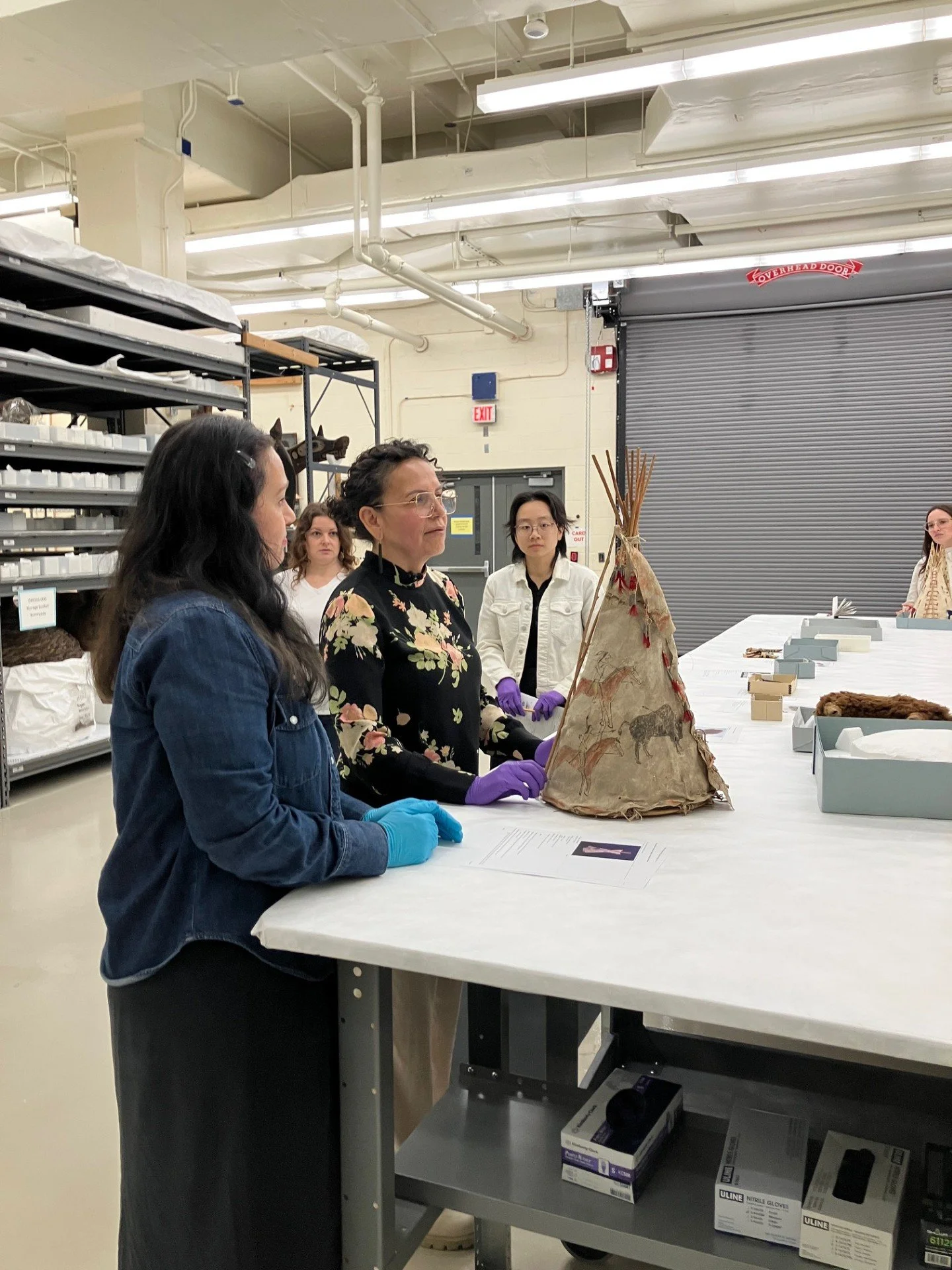
Hosting lab tours
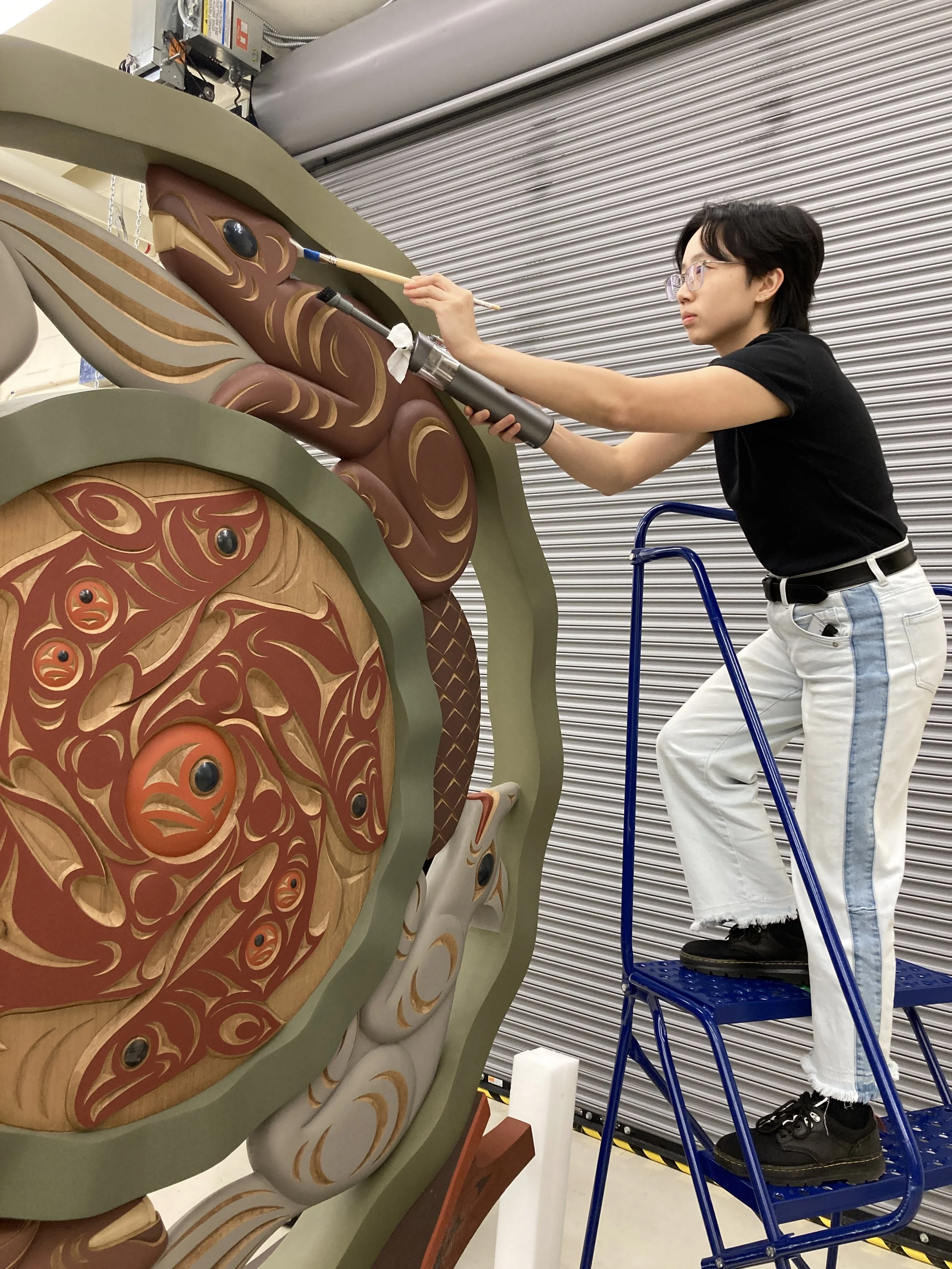
Research Days
I spent my third year research days at the Cleveland Museum of Art, the American Institute for Conservation (AIC) Annual Meeting in Montreal, and at the Firebird Foundation.
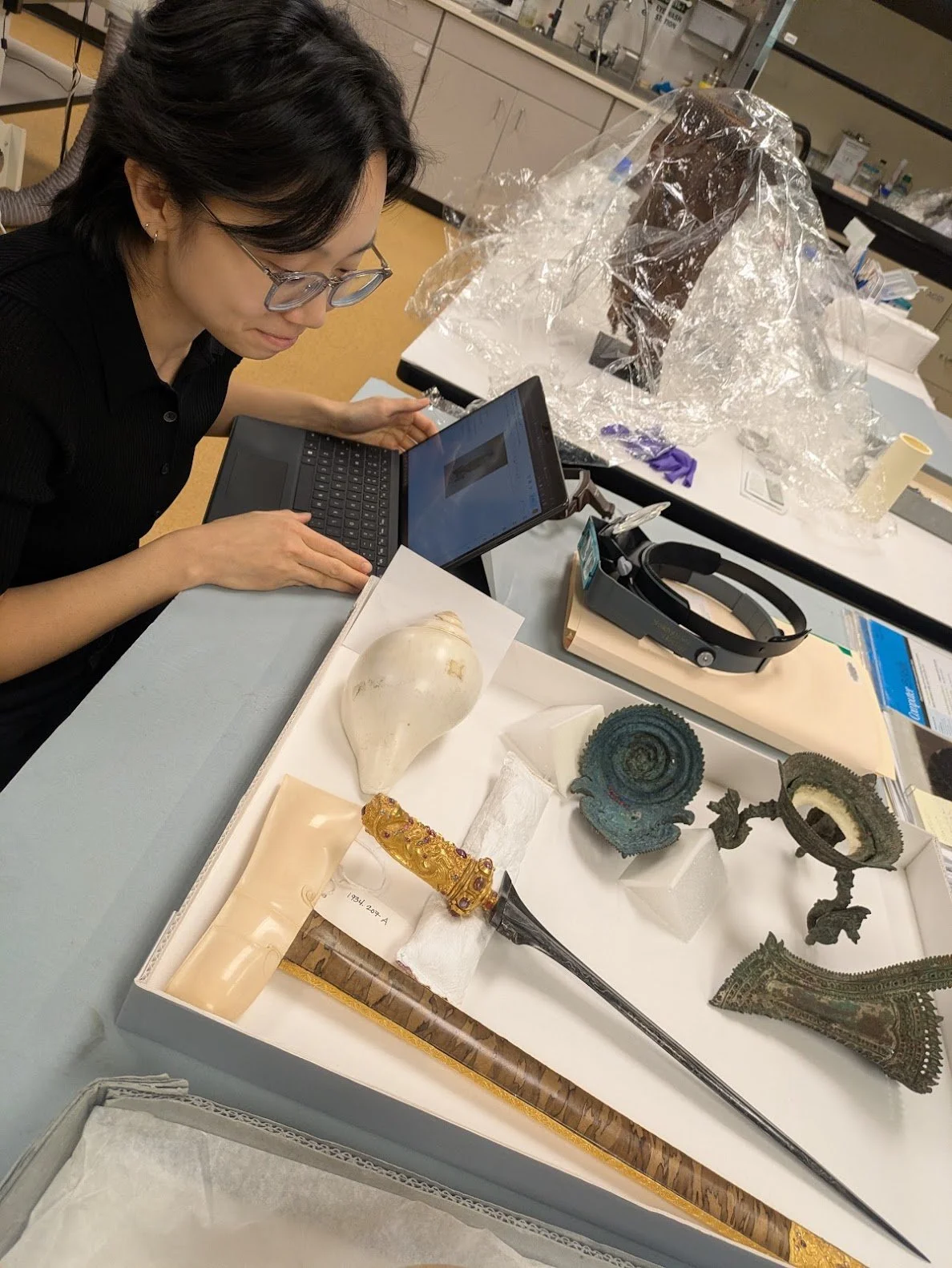
Investigating Southeast Asian objects in the CMA collection. (Image by Leah Palmer)
Cleveland Museum of Art
The CMA generously hosted me in their objects lab during the October 2025 government shutdown. Beth Edelstein and Colleen Snyder are the objects conservators there and they included us in departmental activities such as updating materials ID for collections objects, discussing desalination of unstable limestone, and gallery tours. I spent time with several collections objects of Southeast Asian origin to investigate outstanding questions that remain about their cultural origin and interpretation.
American Institute for Conservation Annual Meeting
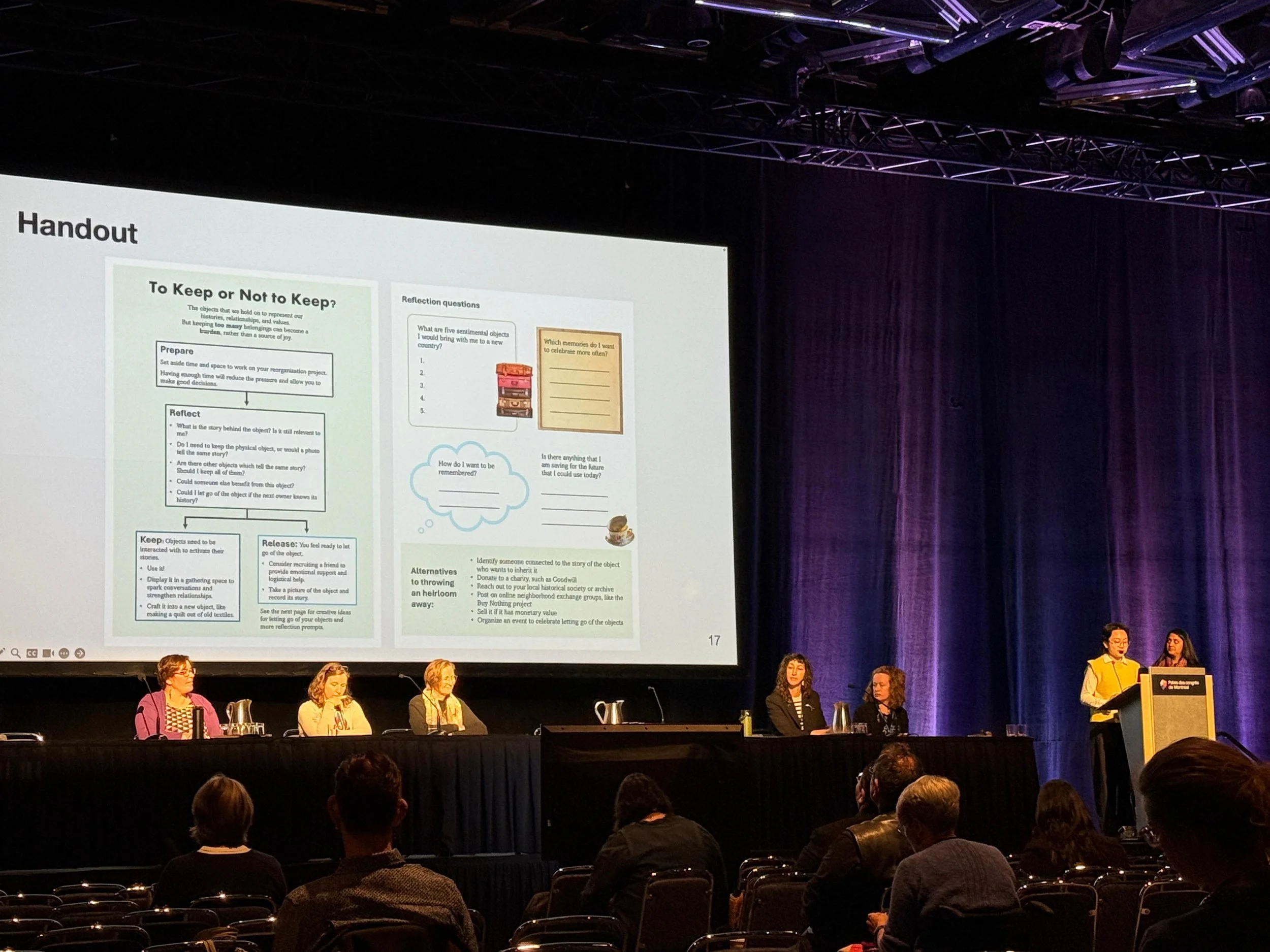
I presented on my NEH project for heirloom management in a presentation titled, “Beyond Repair: A Framework for Heirloom Stewardship”.
Firebird Foundation Collections and Archives
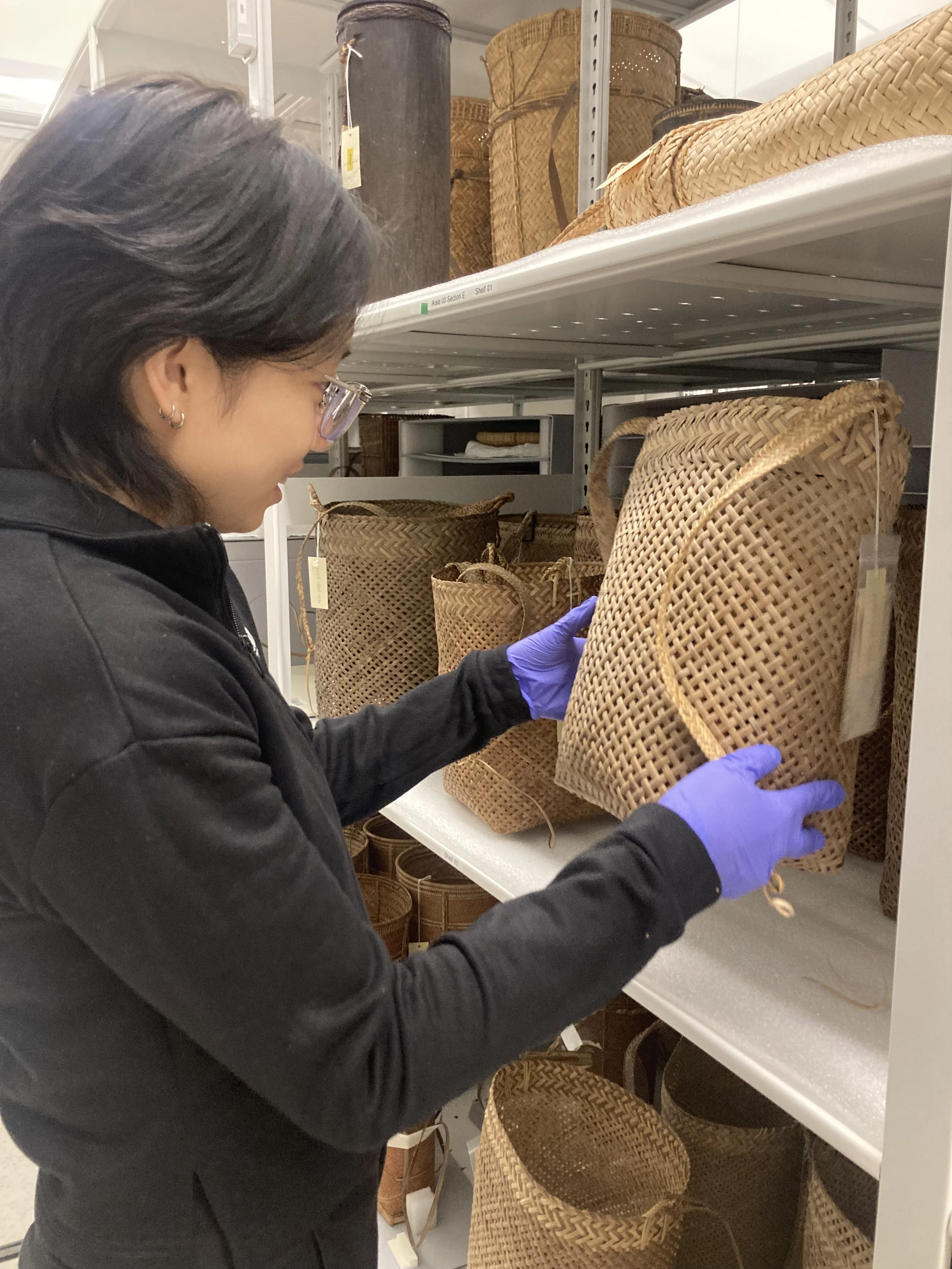
The Firebird Foundation Collections and Archives hold the collection of its founders, George N. and Laura W. R. Appell. The Archives preserve and provide access to significant anthropological collections with a primary focus on Borneo.
My research at Firebird focused on identifying plant materials used in traditional Bornean material culture. I additionally was able to identify the potential cultural origin of some of the objects.
Museums and cultural institutions visited:
Asian Art Museum, D.C.
African Art Museum, D.C.
National Museum of Natural History, D.C.
American Art Museum, D.C.
Renwick Gallery, D.C.
National Air and Space Museum, D.C.
Hirshhorn Museum and Sculpture Garden, D.C.
National Museum of Women in the Arts, D.C.
National Gallery of Art, D.C.
Library of Congress, D.C.
National Museum of American History, D.C.
Glenstone, MD
Metropolitan Museum of Art, NY
Museum of Modern Art, NY
Cleveland Museum of Art, OH
Intermuseum Conservation Association, OH
Folger Shakespeare Library
Baltimore Museum of Art, MD
Colonial Williamsburg, VA
Historic New Orleans Collection, LA
National WWII Museum, LA
Whitney Plantation, LA
Other Work:
WUDPAC Organics Block
I assisted Lara Kaplan in teaching the basketry materials lecture of organics block. I presented on some of the basketry treatments I did during my second year at WUDPAC and assisted in the basketry mending exercise.
UD Center for Material Culture Studies (CMCS)
I presented a poster at the CMCS 50th Anniversary celebration on the handout that I created for managing collections of heirlooms.
Images taken by: Beth Holford, Caitlin Mahoney, Susan Heald, Catherine Fogden, Leah Palmer, Polly Deely.